Newsletter - August 2026

In last November's newsletter I began to explore the idea of an alternative approach to congressional redistricting. In May's newsletter, I provided a much more detailed framework for exploring the impact of race-neutral and party-neutral principles on congressional redistricting.
I am very pleased to report that the Problem Solvers Caucus has created a bipartisan gerrymandering reform framework that incorporates many of the principles I envisioned when I first embarked on my "Real Representation" project.
Specifically, the Caucus has endorsed a framework based on the following five principles:
Stability and predictability in representation;
Transparency and public confidence in the map-drawing process;
Fair and consistent application of standards across states;
Respect for communities and political subdivisions; and
Reduction of incentives for partisan manipulation.
The framework would continue to leave the actual drawing of congressional maps to the states, while establishing nationwide standards designed to create a more transparent, fair and consistent redistricting process across the country.
The Problem Solvers Caucus is building an impressive coalition of elected officials, election experts, special masters, legal scholars, and stakeholders from across the political spectrum to help guide its work. Over the coming months, the Caucus plans to develop these principles into bipartisan legislation.
Where does "Real Representation" go from here?
My "Real Representation" project is now shifting from developing an alternative redistricting approach to building grassroots support for meaningful bipartisan reform.
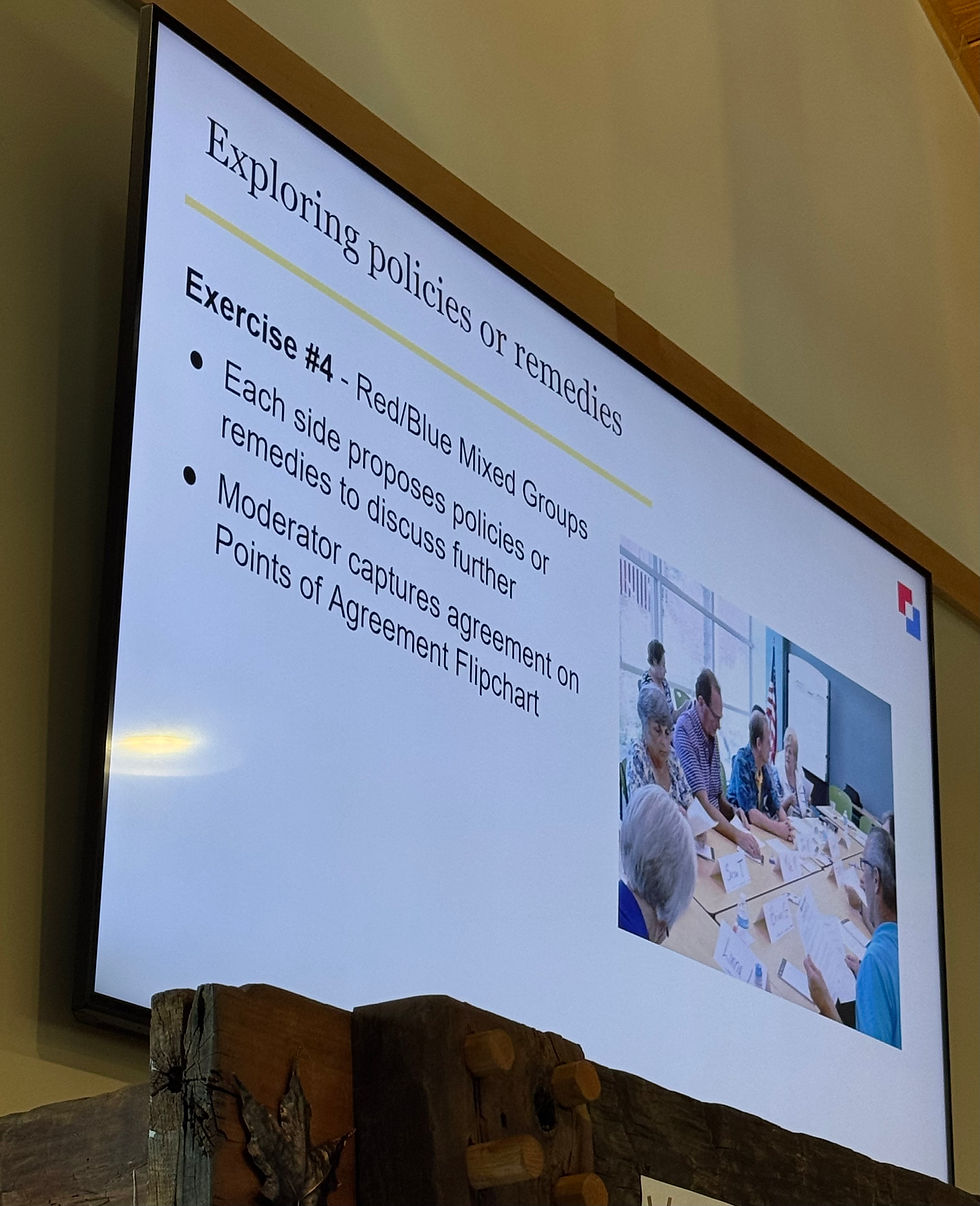
I believe local town hall meetings could provide citizens with an opportunity to learn more about both the redistricting process and the Problem Solvers Caucus proposal, while also giving them a meaningful voice in helping to inform the resulting legislation.
I am currently developing a proposal for these town hall meetings that I will be sharing with organizations and individuals who may be able to help turn this idea into action.
I will be taking a break from the newsletter in September, so my next newsletter will be in October. I hope to have much more to share with you then.


Love the four core reforms in the framework:
Once-a-Decade Redistricting: Restrict congressional redistricting to once every ten years following the decennial Census.
Nationwide Uniform Standards: Require congressional districts to be drawn using clear, objective criteria while rejecting partisan advantage and incumbent protection as legitimate goals.
Reducing Partisan Influence: Support approaches that minimize partisan influence, including independent commissions, algorithmic mapping, and other mechanisms that promote public confidence.
Federal Resolution of Challenges: Establish a consistent federal process for resolving congressional redistricting disputes.